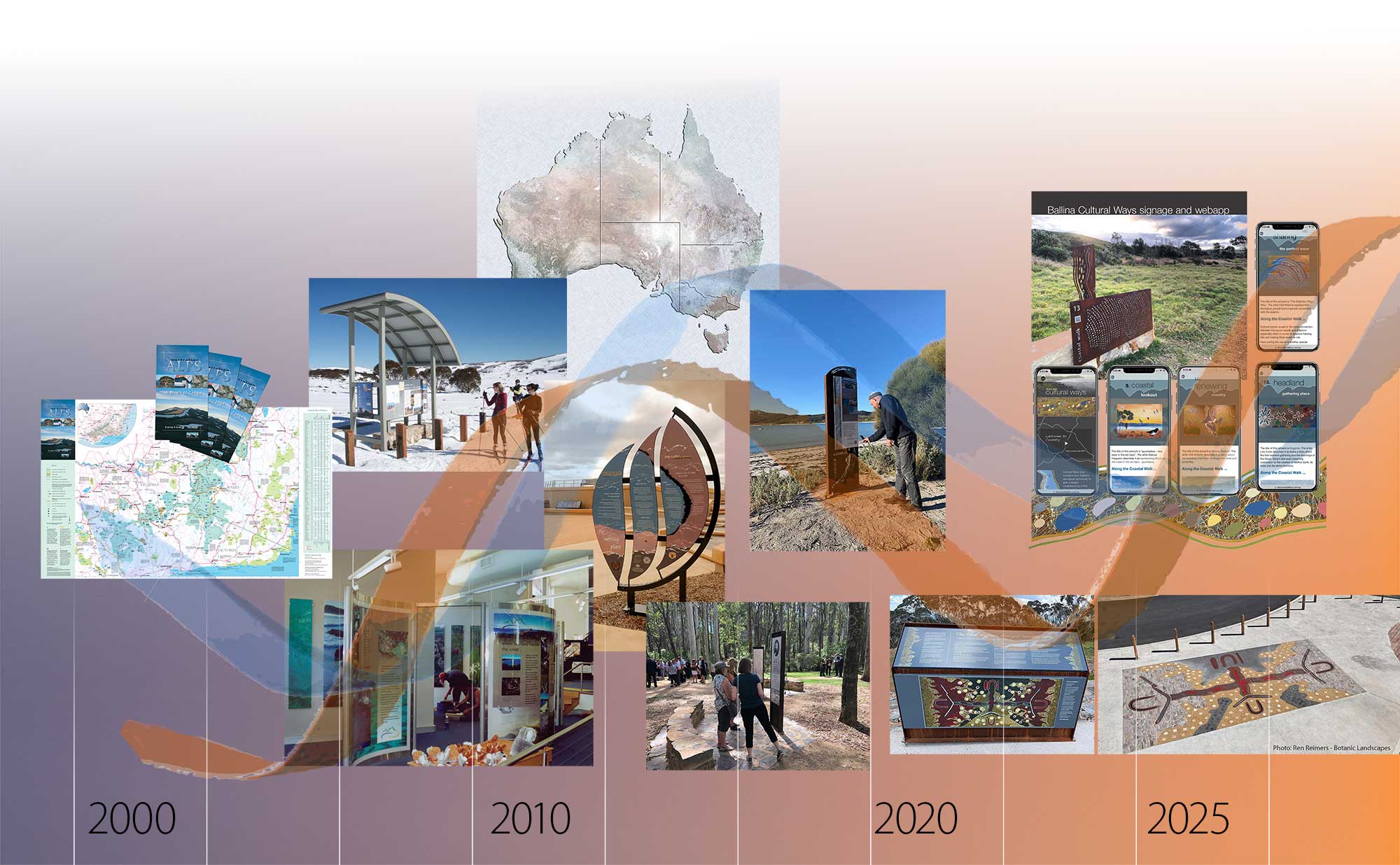
Nature Tourism Services' portfolio of works since 1998 embraces projects across Australia.
Our product suite has evolved over this time in response to changing technologies and user requirements.
Today these archives give us a window into the dramatic changes that continue to unfold around us today. While the works featured here speak directly to our role as the contracted supplier of the services unless otherwise identified, virtually all of them are best recognised team efforts.
We assist land managers in providing a niche suite of skills associated with the planning, structural, landscape and graphic design and other pre-production components of the works. 'Our portfolio' here hence references team projects we have been privileged to assist with.
We have on rare occasions (as in the case of the Mungo Meeting Place project) also worked as part of a larger consultant team. As required we subcontract out related manufacture / printing and installation / delivery components of the projects to a select group of suppliers that are fully integrated into our Total Quality Management systems.
In some instances we have also included local area experts to work with company directors / design operatives Ian Charles and Marianne Walsh on a specific project. Our work subcontracting photographers / authors Ian Brown and Cliff Winfield embraces both Greater Blue Mountains / Barrington Tops NP projects in New South Wales and Western Australian work at Geraldton and Perth. More typically however the local area expertise comes via the active engagement of the client in shaping and crafting a product that directly meets the needs and aspirations of both them and their stakeholders.

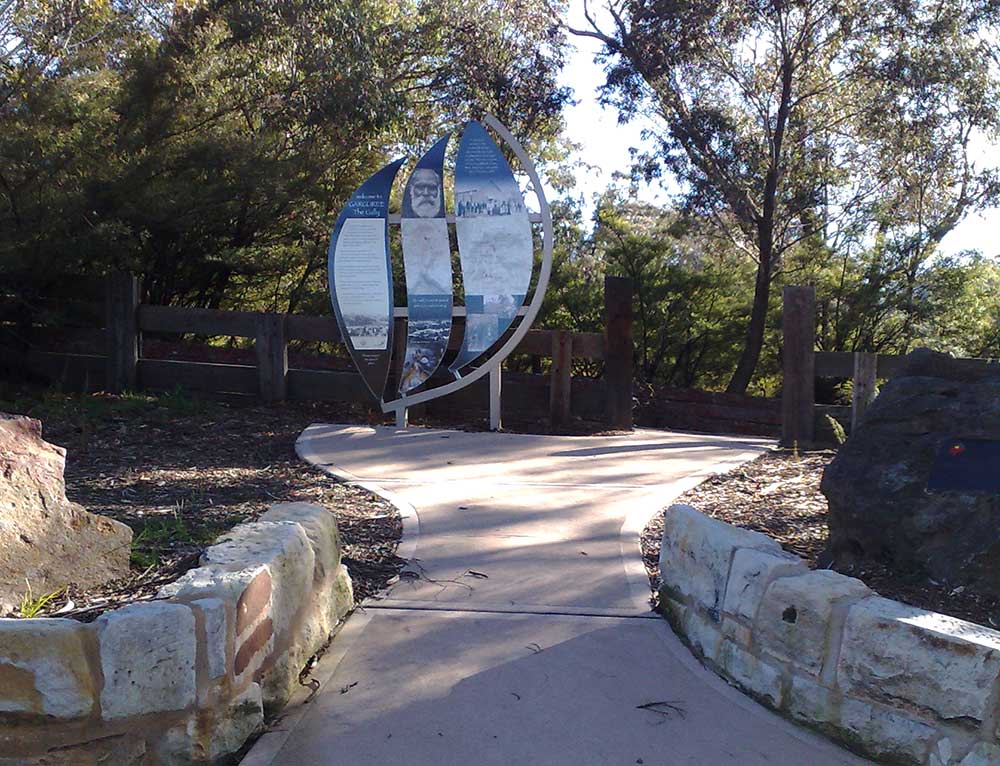
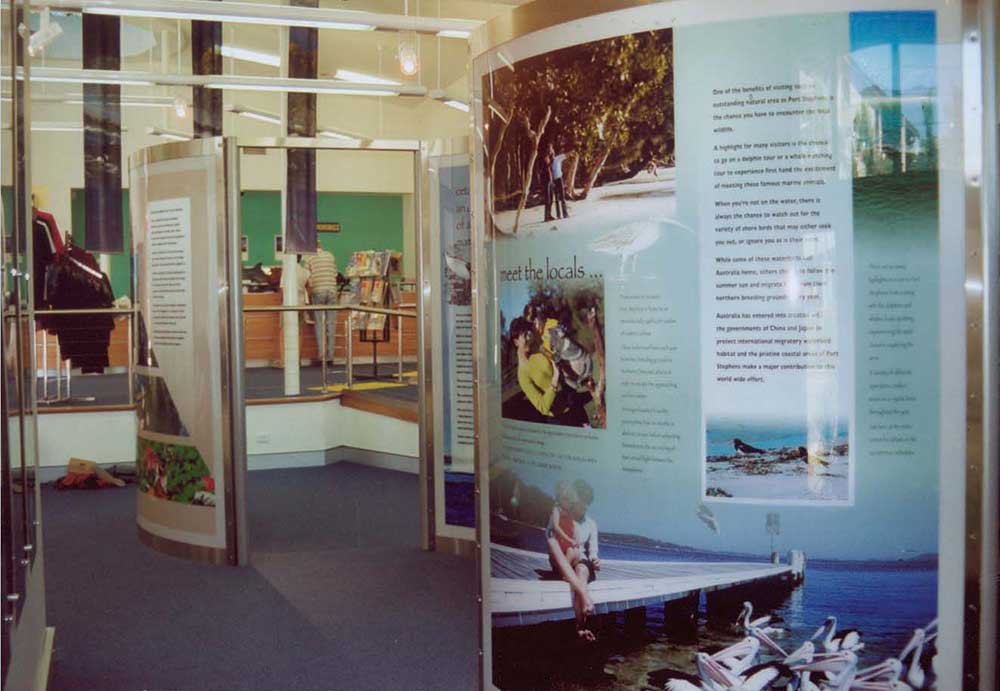
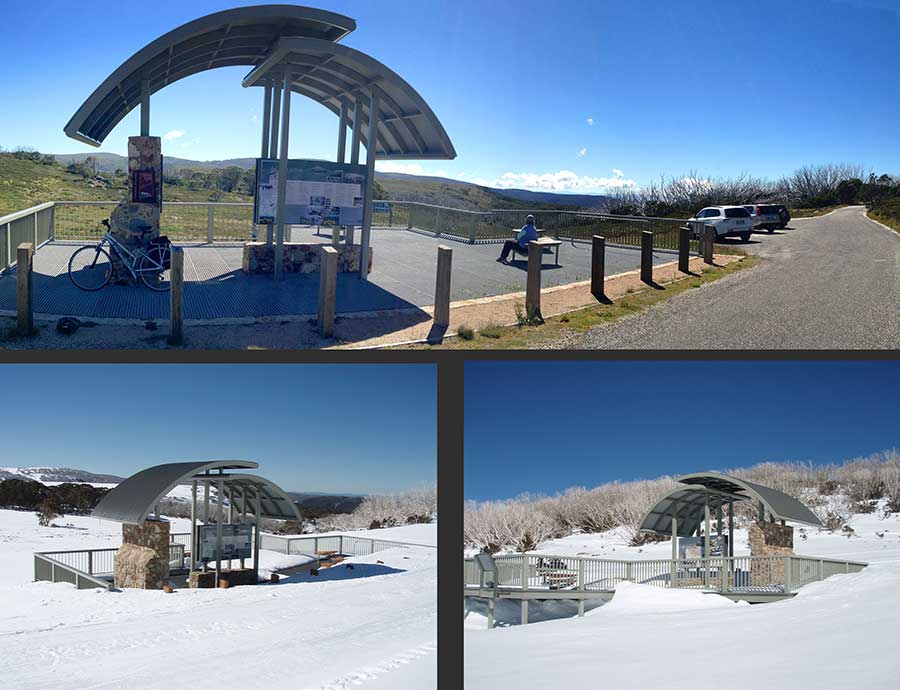
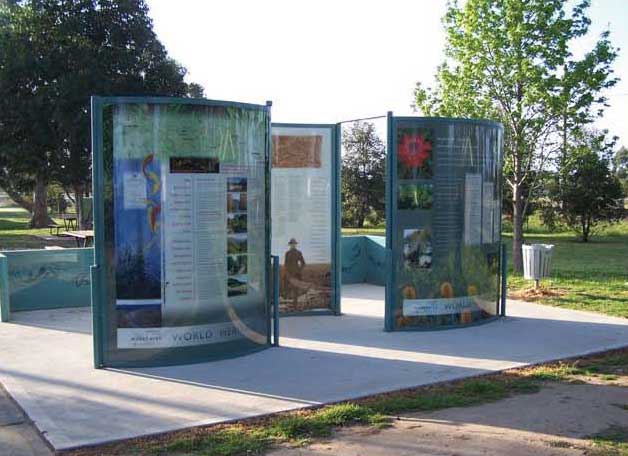
A selection of our major signage projects from across Western Australia, Queensland, NSW, ACT, Victoria and Tasmania is featured below.
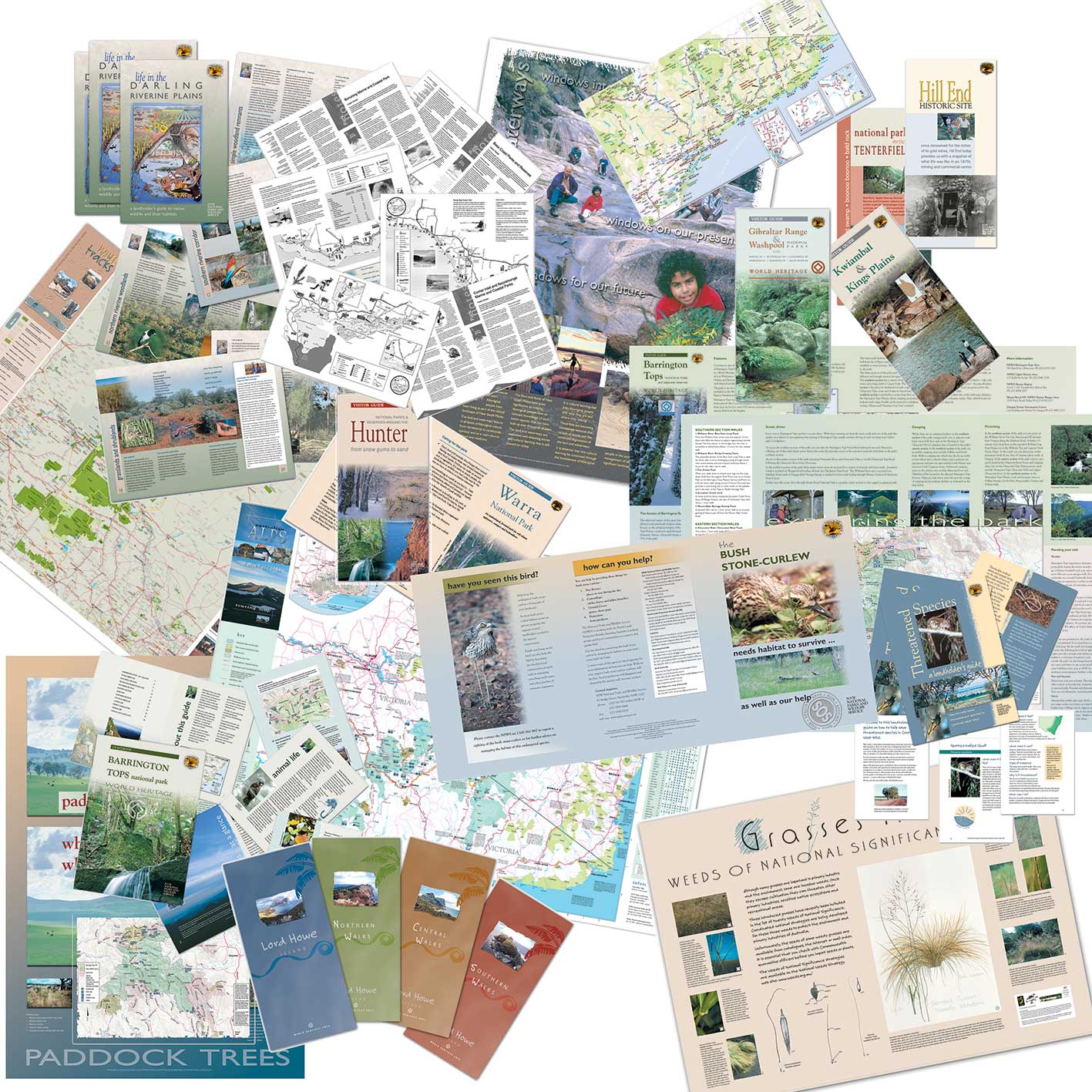
The paper trail and desktop publishing
It's hard to look back now and remember just how fundamental printed paper was to conveying information at the time of Nature Tourism Services' startup in August 1998. Adobe was pursuing the development of PDF files to deliver cross platform postcript content but its blossoming was still a full decade off. And the internet - well useful for email as far as it went.
Nor was paper use confined to just brochures, maps and guidebooks when it came to communicating with visitors to natural areas and heritage sites. Even printed digital displays in protected shelters had to use paper panels encased in laminate to talk to visitors in the wild.
This large format digital printing however was then still a radical breakthrough. Combined with desktop publishing celebrating its first decade of operations following the release of the Macintosh II computer in 1987 it meant massive creative and productivity enhancements were underway in the preproduction design space.
Nature Tourism Services was ideally placed to engage with this process. Ian Charles had been employed as a graphic designer / interpretive officer with the NSW National Parks and Wildlife Service across this desktop publishing startup decade.
He had especially grappled with the challenge of creating bespoke visitor maps by importing content from GIS data systems and working with these up in Illustrator.
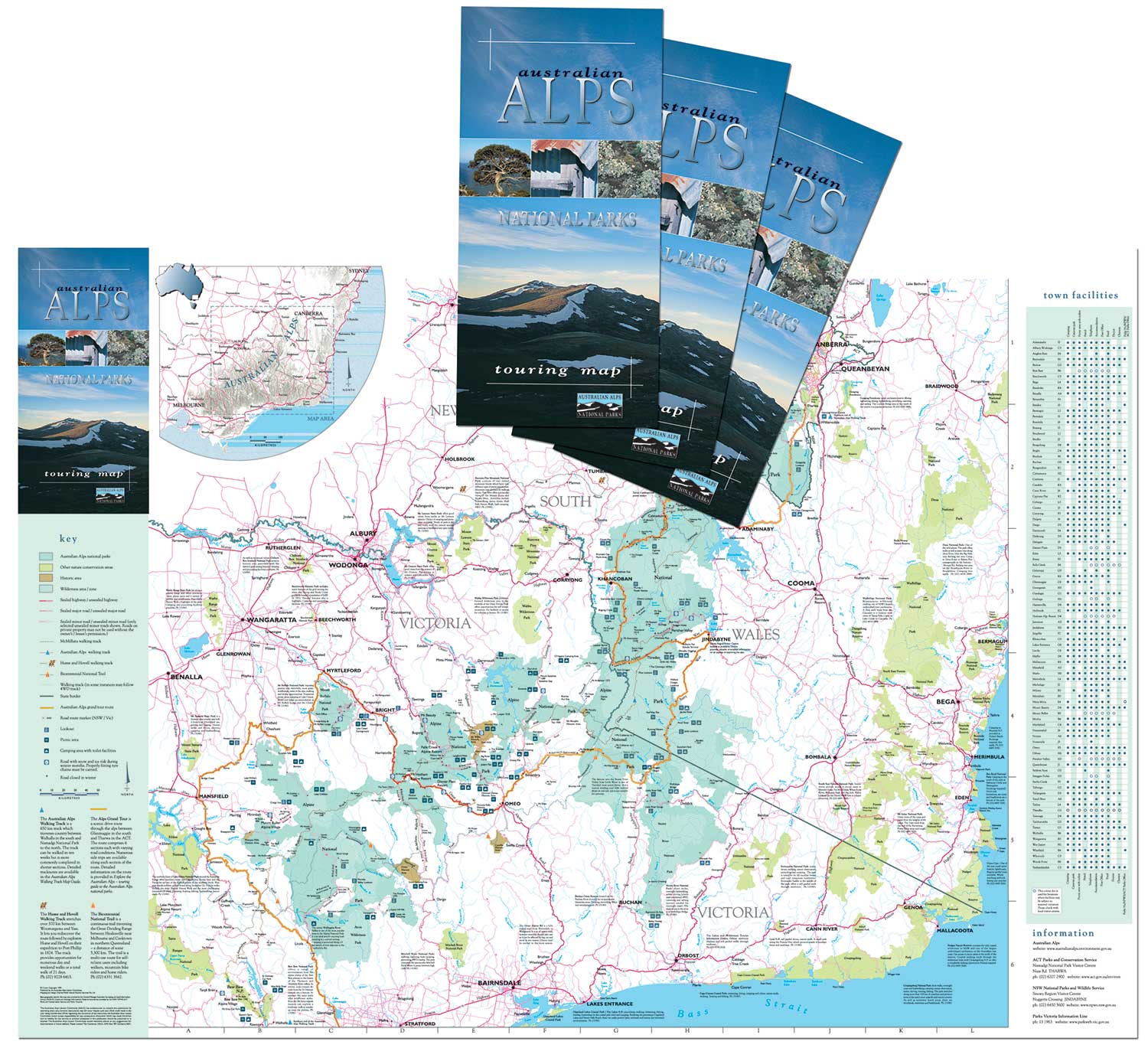
Given the massive data handling and processing power limitations of the time this had many challenging aspects to resolve. As a result mapping work was then commonly avoided where possible in the conventional design process.
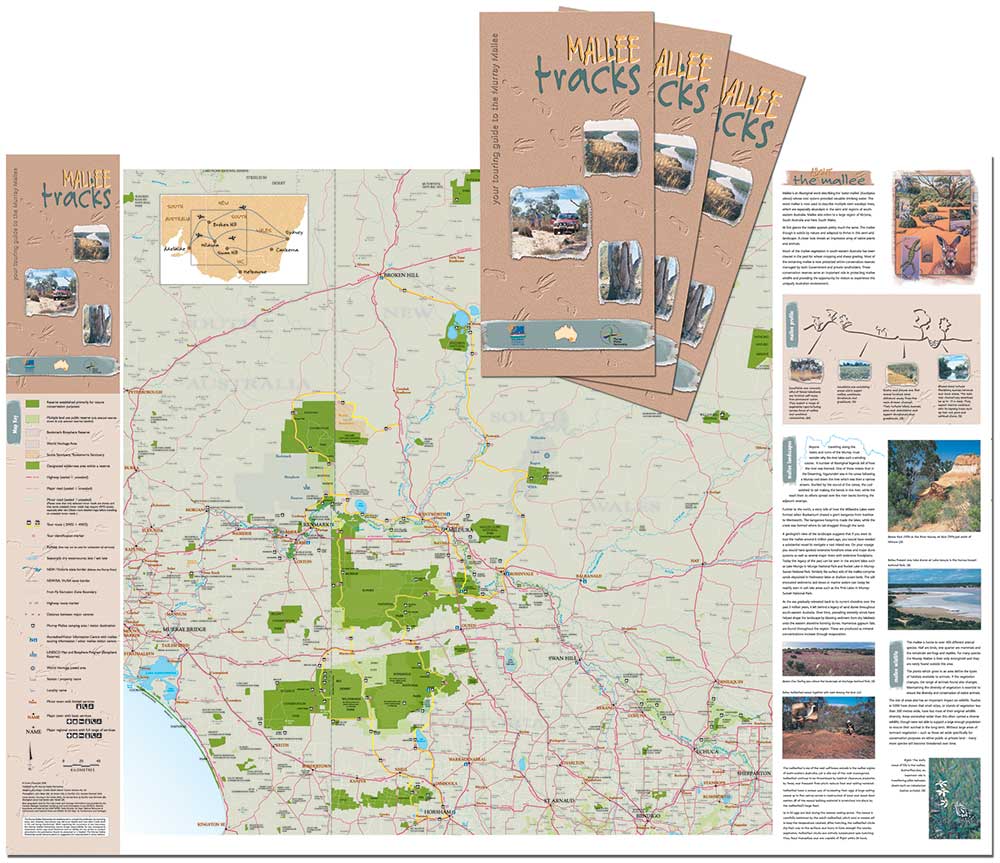
For us though mapping was central to everything. People could only begin to connect with a place or an experience if they first had a clear idea of where it was relative to their current location. As well as including maps in our signage we also produced feature regional flagship maps.
The production of the Australian Alps National Parks map was the first major project we completed in 1999.
Illustration and interior design
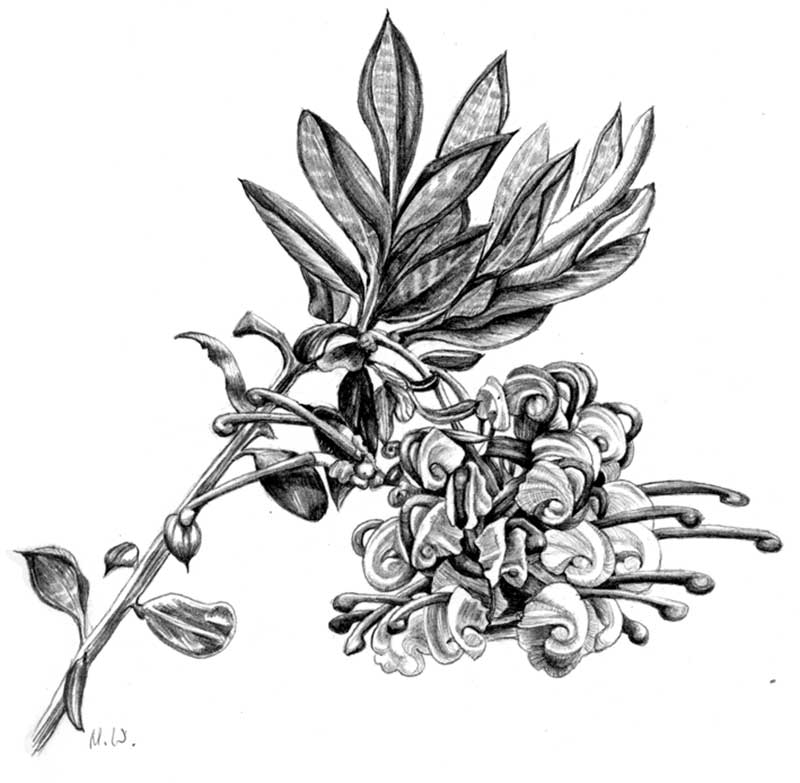
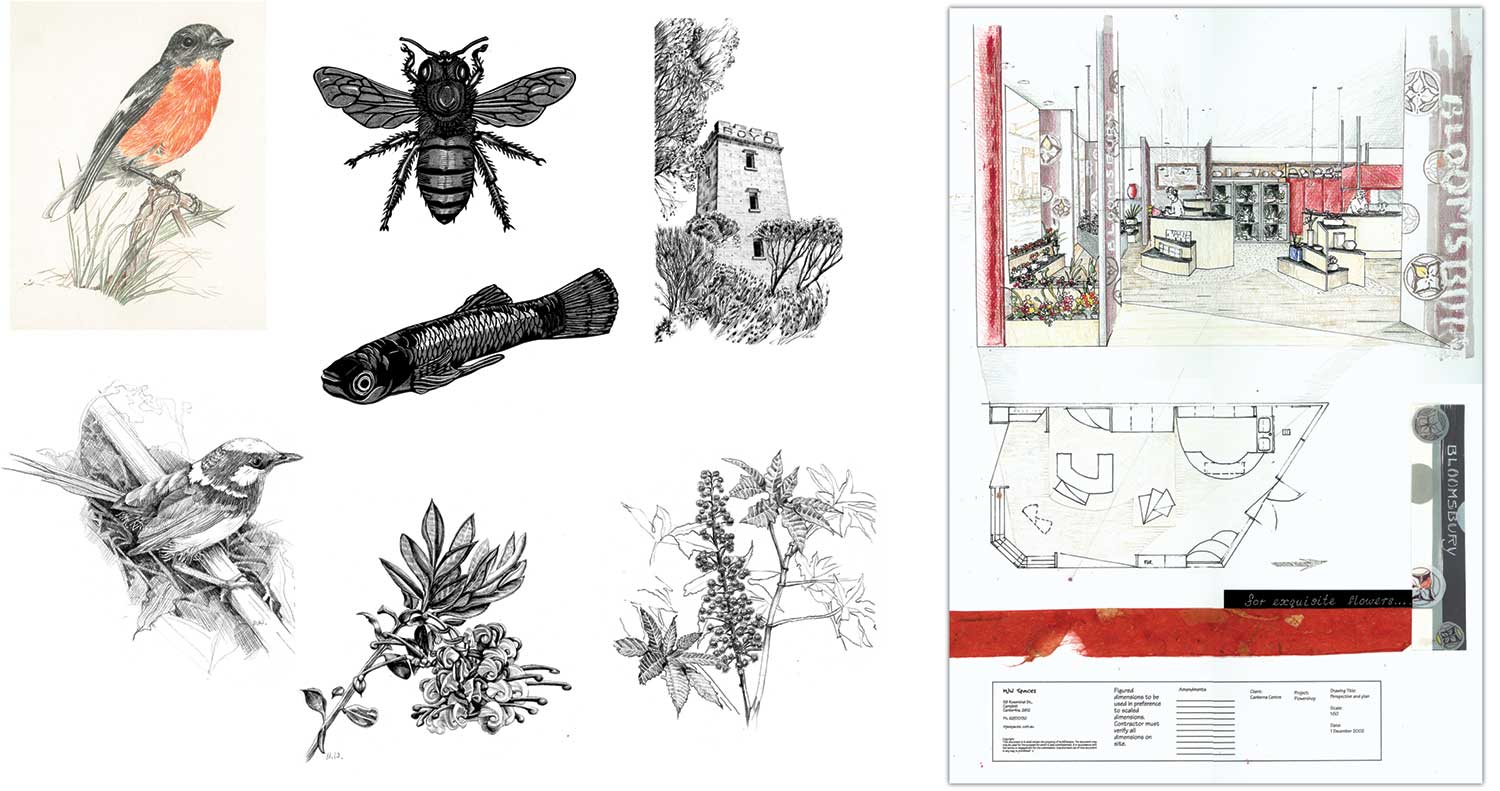
It's hard now to remember how crucial good illustrations were to effective communications back c. 2000. Today we rarely see single colour printing as four colour offset presses capable of laying down full colour in a single pass and short run digital printing means using colour is now not the luxury it used to be c.2000. Back then however single colour printing and monochrome signs were very much the default option and in this space good illustrations were vital. One example of this was a single colour weed identification booklet that the Lord Howe Island Board distributed to island residents in 2002 (refer castor oil plant sketch below).
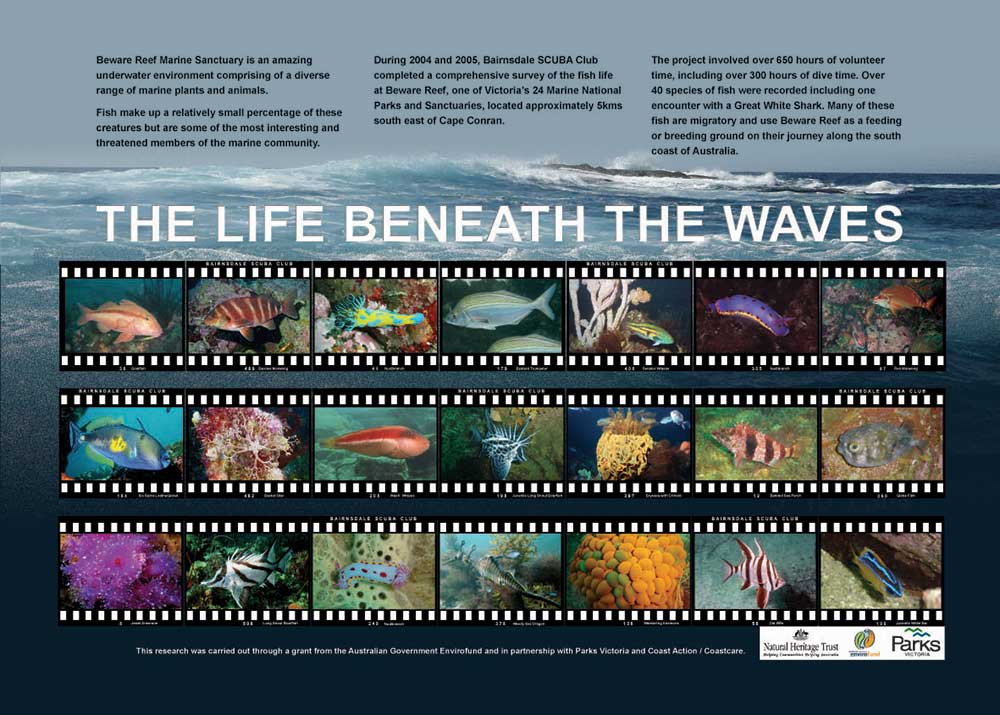
A major inhouse asset for us in this work was NTS company director Marianne Walsh's creative drawing ability and formal training as an artist at East Sydney Tech [now National Art School] in Darlinghurst where she majored in sculpture. In addition to her work on our projects she was also commissioned to undertake all the wildlife illustrations needed for the opening of the National Museum in Canberra in 2001 (refer below bee and fish examples).
Her ability in conceptualising 3D spaces saw her undertake 3 years of formal interior design training over our startup phase so as to assist our company's work in curating both indoor and outdoor settings as well as in the custom design of signage elements. This skill set has remained a foundational element of all our project work now for over 25 years.
Organic solvent printing
When it came to putting up interpretive signs in an open air setting in the 90s, you had two main options — monochrome photo metal sign panels or a conventional screenprinting process that could lay down pre mixed colours onto the sign panel.
The introduction of organic solvent printing at the start of the 20'noughties' changed this equation.
These inks penetrated vinyl and PVC substrates, binding pigments so strongly that prints resisted UV fading and rain without lamination. They also produced hazardous fumes, intense odors, and severe printhead clogging, necessitating heavy industrial ventilation.
Eco solvent prints were soon introduced as an improved alternative but the problems of vandals being able to easily tear the surface unless the print was mounted behind protective perpex and the print expanding and contracting at different rates to the underlying metal panel causing bubbling still remained.
This in turn saw the uptake by top end suppliers willing to make the major investments of UV flat bed printing direct to metal with the inhouse paint booth then spray painting on the protective 2 pack clearcoat finish.
This brought full colour interpretive signs with a full colour gamut delivered on a white substrate (rather than grey aluminium) into play for the first time.
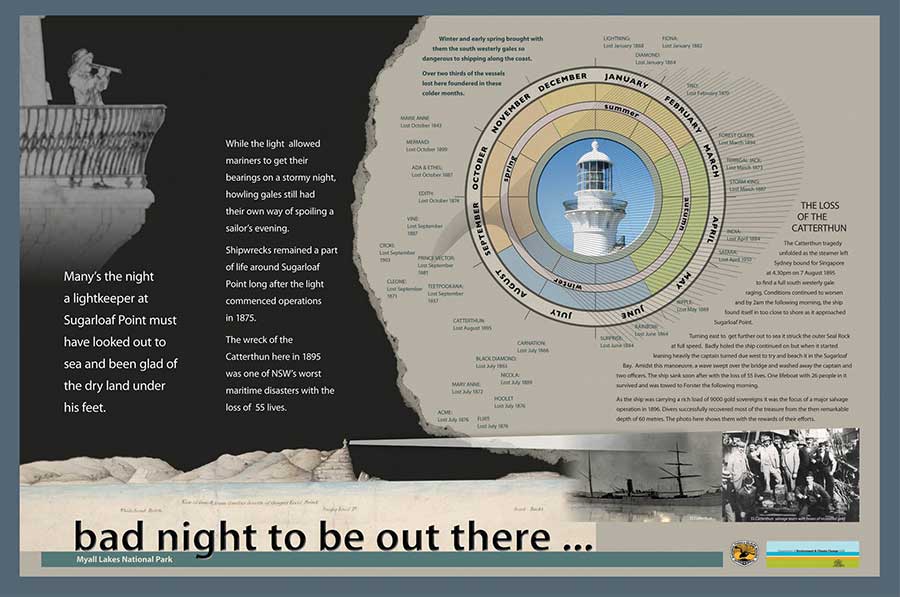
Drive trails and mapping
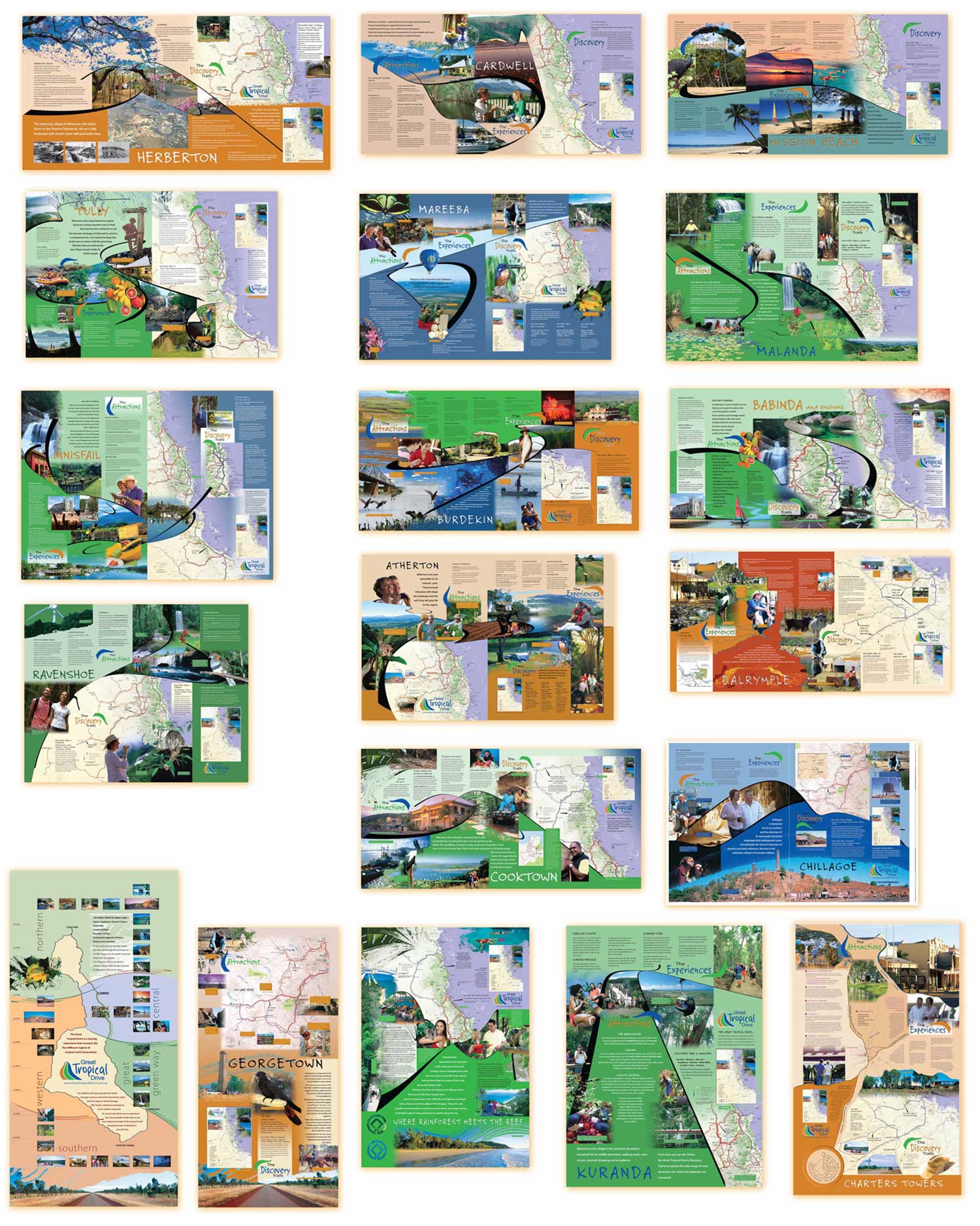
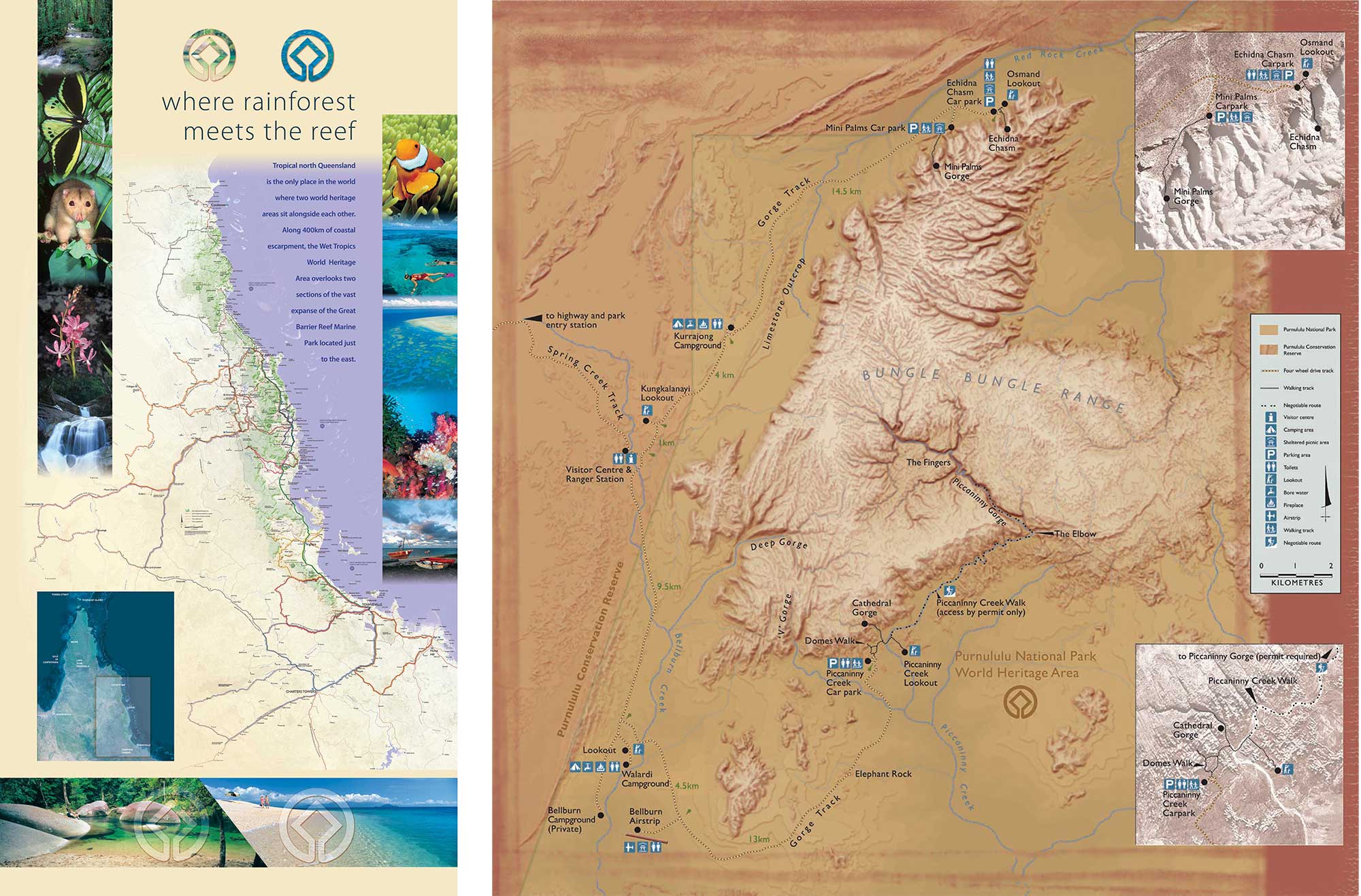
With the development of outdoor digital print options in the early 2000s, our signage solutions could make full use of our mapping and associated design capabilities. This resulted in us designing and installing in 2005 the visitor orientation signage materials across 14 venues in far North Queensland required for the roll out of the $6m Great Tropical Drive program. We were also commissioned in 2006 to design the orientation and interpretation signage needed for the Purnululu National Park World Heritage Area in the Kimberley Region of Western Australia.
A feature of both these projects was the exhaustive 60 hours of work involved for each in compiling the terrain shading needed from the original contour lines and then building a model from these in Photoshop. The process of doing this gave us full control over both shading and colour gradient effects in a manner not then easily accomplished.
An additional consequential and memorable project for us across the 20'noughties' was the work we did in conjunction with our friend and colleague Ian Brown in relation to the then newly declared Greater Blue Mountains Region World Heritage Area. First came the interpretation plan and thereafter the delivery of a suite of on ground orientation materials across this 240km long swathe of the Great Dividing Range. A feature of this initial work was the introduction of a scenic drive option around the entire region.
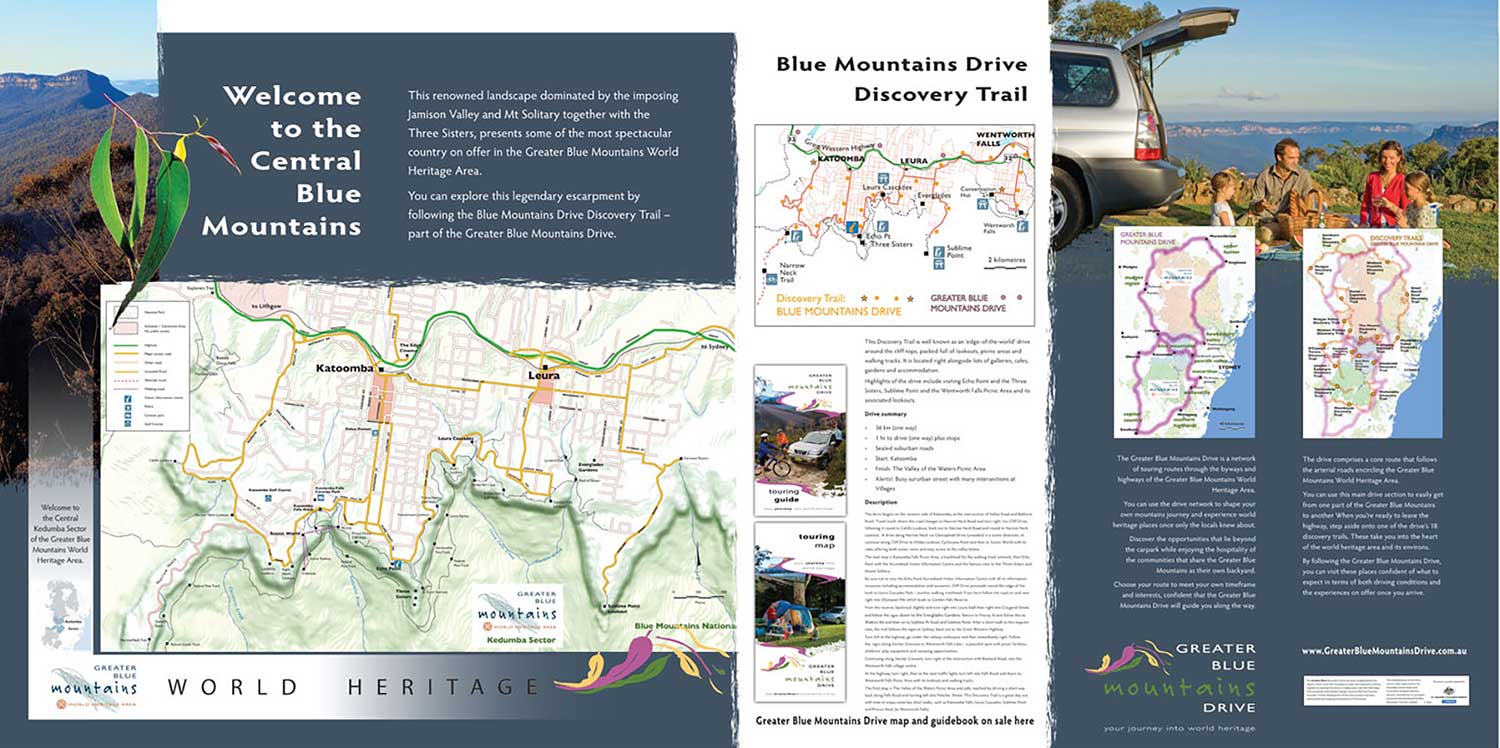
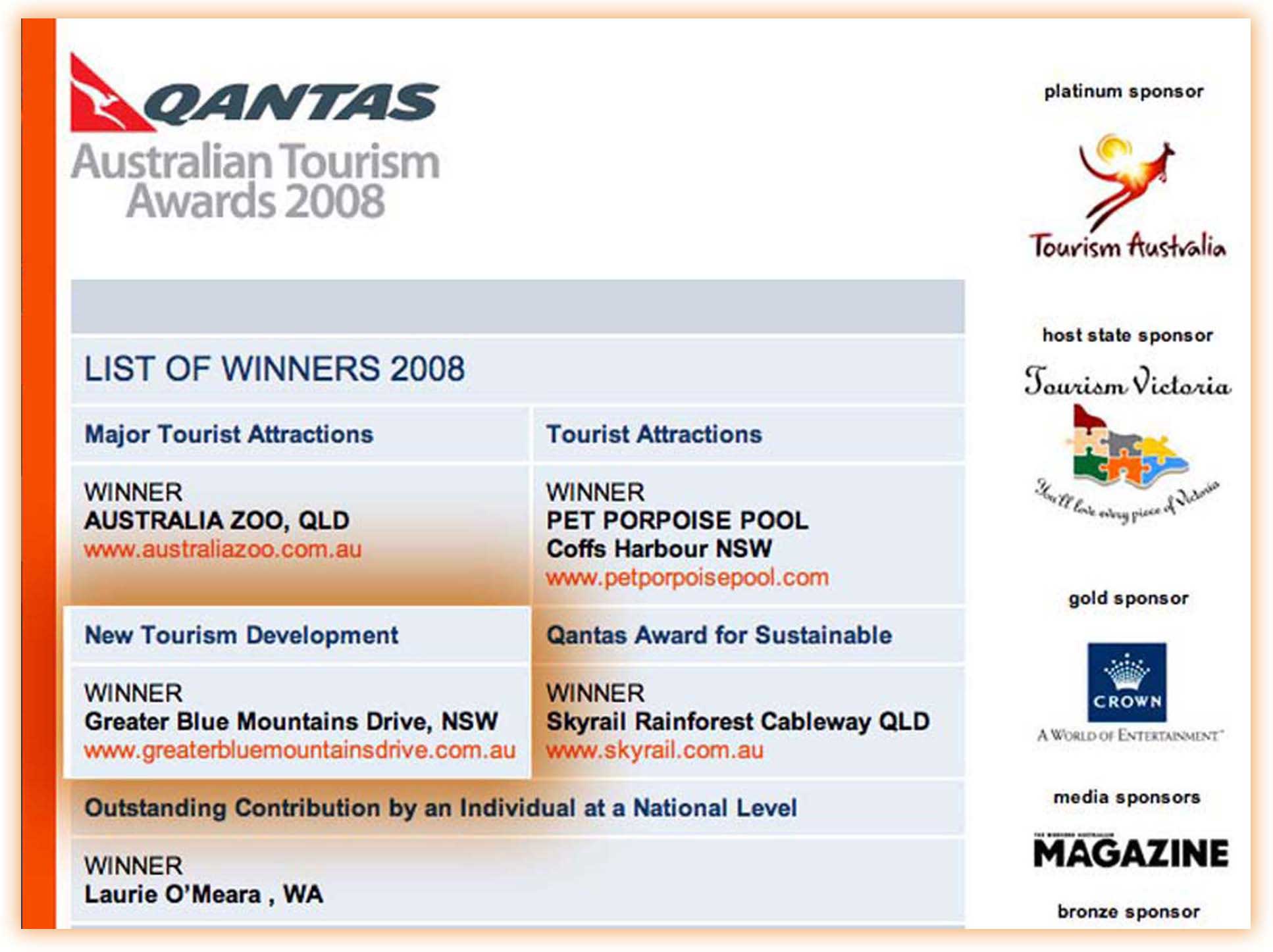
Thereafter in 2007, this route was taken up and expanded in a major regional tourism project to create The Great Blue Mountains Drive involving all the shires around the World Heritage Area. We headed a small project team assembled to undertake this work for the then Blue Mountains Tourism. Its creative use of the new Google Maps worked in by Richard Delaney and also the marketing program undertaken by Karina Groth helped lead to its success in the taking out the Australian National Award for New Tourism Development in 2008.
Exciting times
How can we not today think of this decade as anything other than the birth of the mobile internet and the social media ecosystems that quickly changed forever people's expectations about how and where they accessed their content. It was the decade that introduced the concept of UX design - the notion that you should design communication product solutions from the perspective of the user engaging with them - not the agency delivering them.
This did not mean that all media needed to convert to digital - simply that the user paradigm was shifting. By the end of the decade people were now engaging with your media in a mobile optimised world where information was available 24/7 in the language of their choice. They also expected to be able to customise their information stream to meet their own needs, expectations and interests. How were conventional interpretive media going to respond to this new operational paradigm?
This was a question we saw coming at the launch of the first iPad and the introduction of Android phones in 2010. We hence embarked on a major in house upskilling initiative to introduce hand-coded HTML/CSS web design into our workflows. The learning curve here was extremely steep as we explain in detail on the digital page of our website. The good thing was that really everyone from the tech companies down was struggling to respond to the challenges of delivering content to people's mobile devices world prior to 2014 with the much awaited roll out of HTML5 and the introduction of modern mobile optimised internet browsers.
Once this platform was in place, mobile internet and smartphones delivering web app content via the device's internet browser broke down the accessibility barriers that had limited non English speaking visitors or visually impaired users from accessing content they could connect with. Audio content once the sole domain of guided tours could be delivered via the same process. For remote areas users could be invited to download smartphone PDF guides to their mobile device prior to leaving areas with mobile reception.
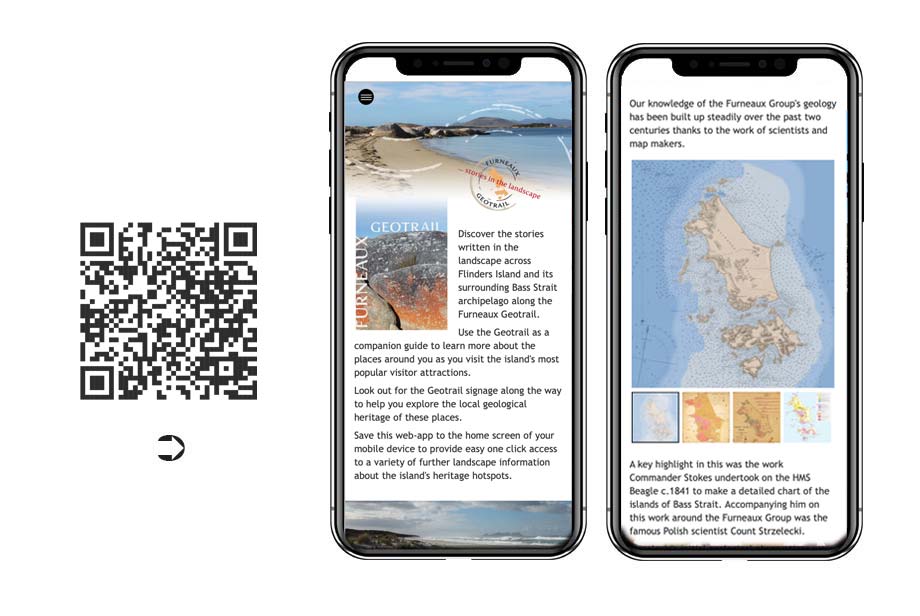
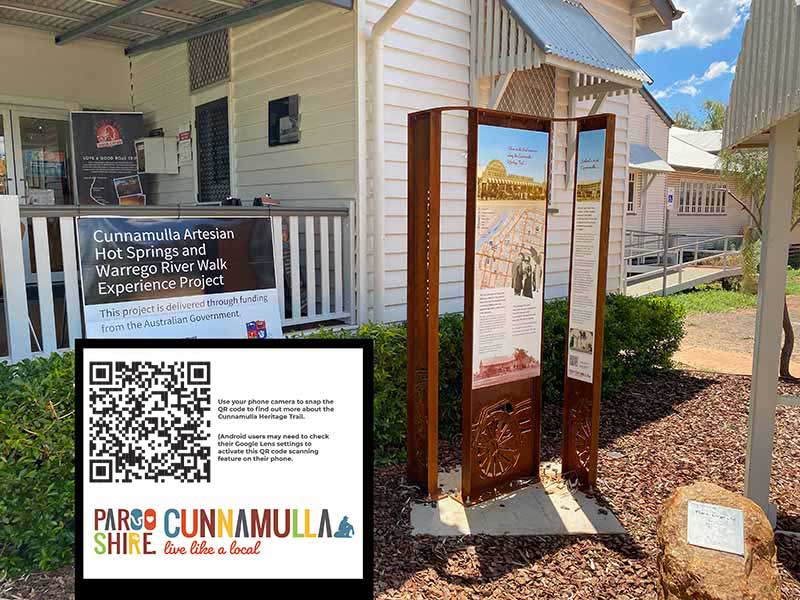
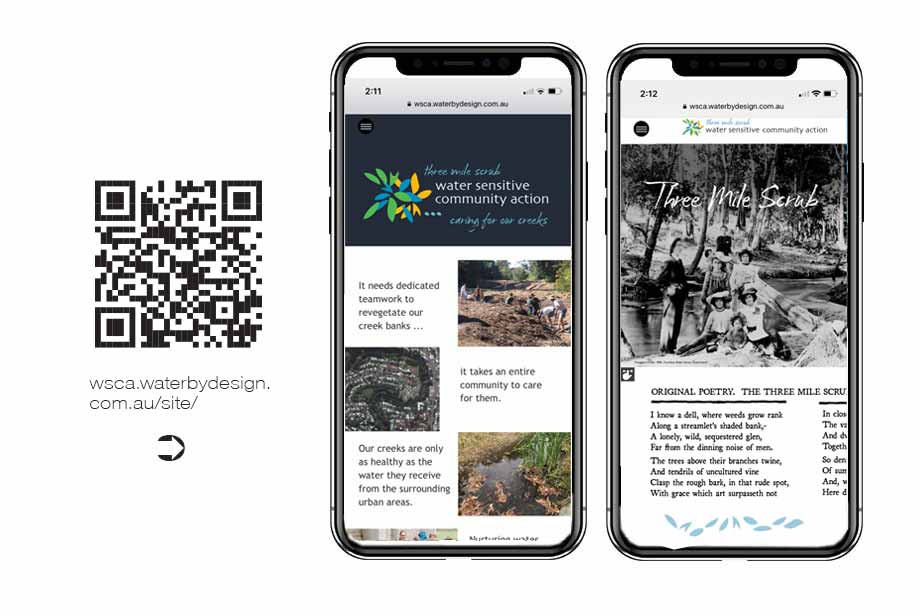
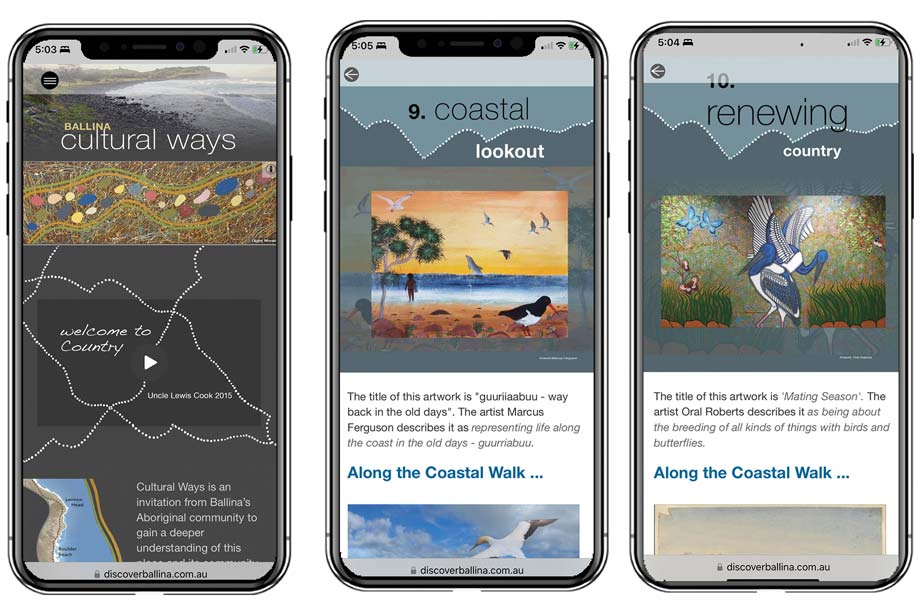
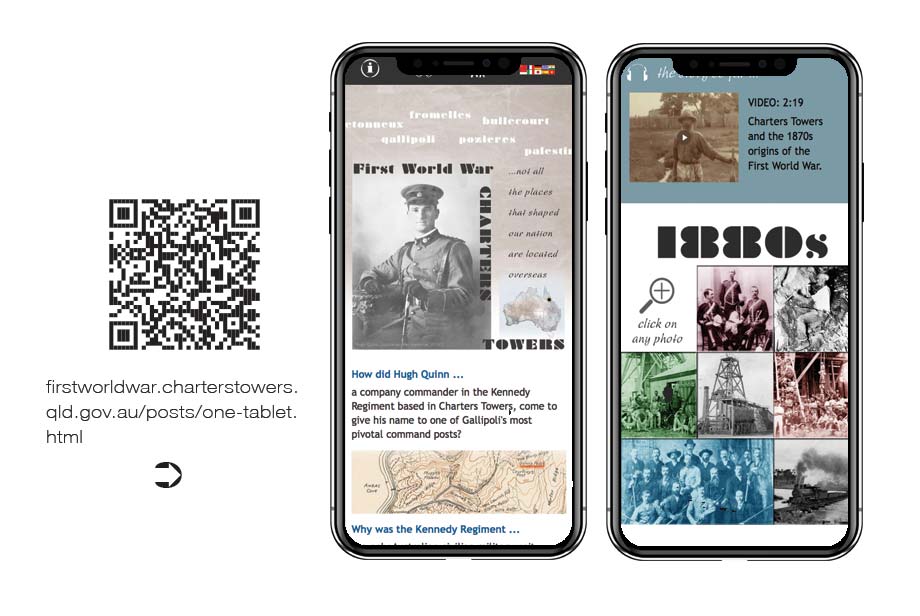
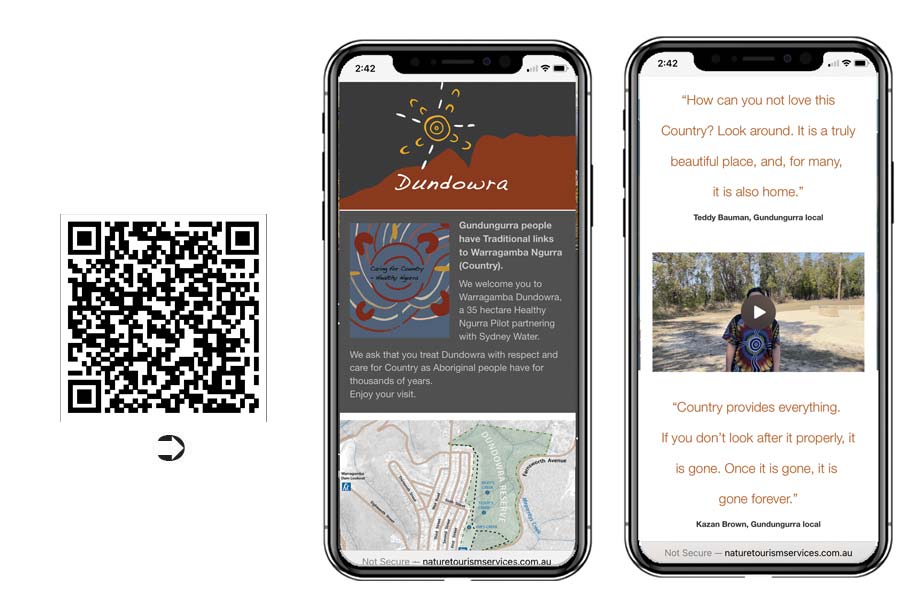
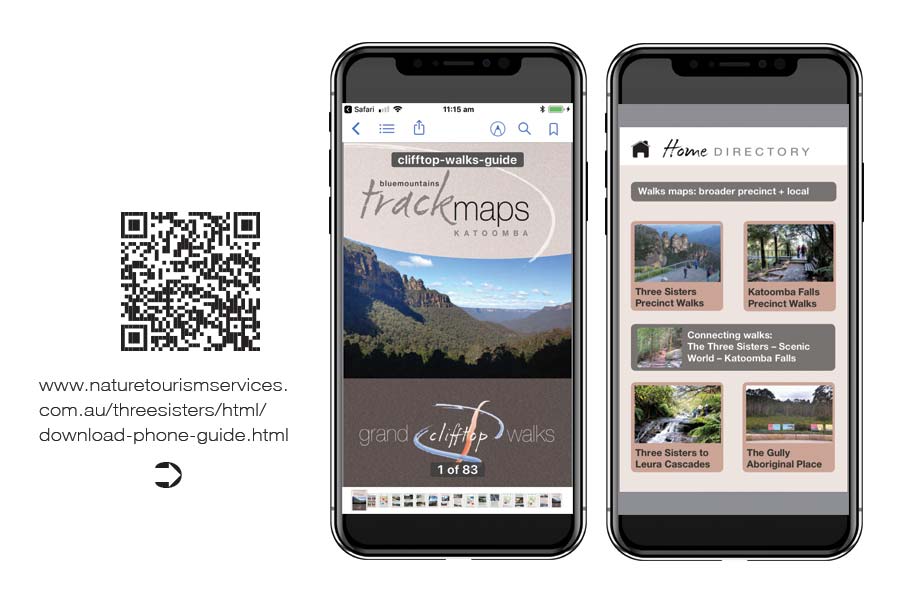
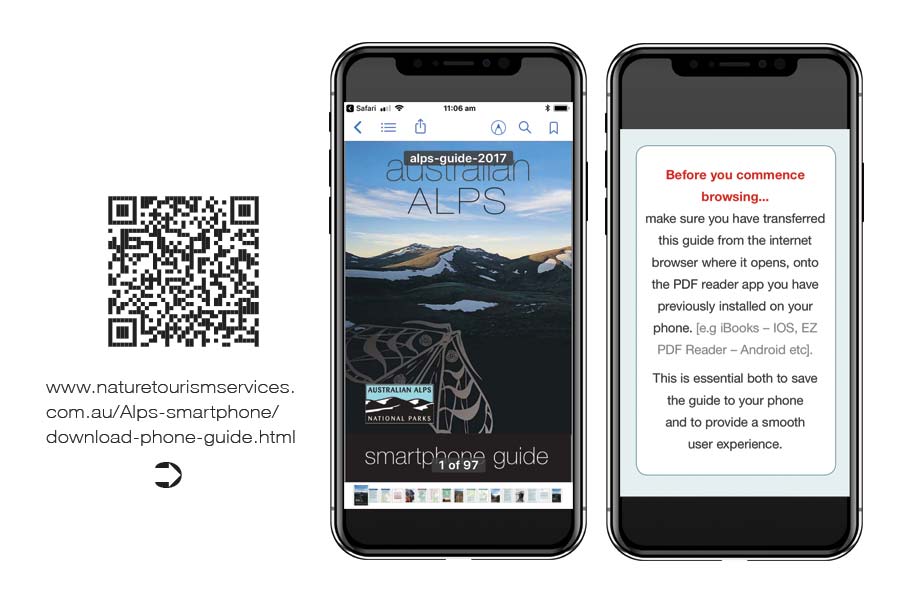
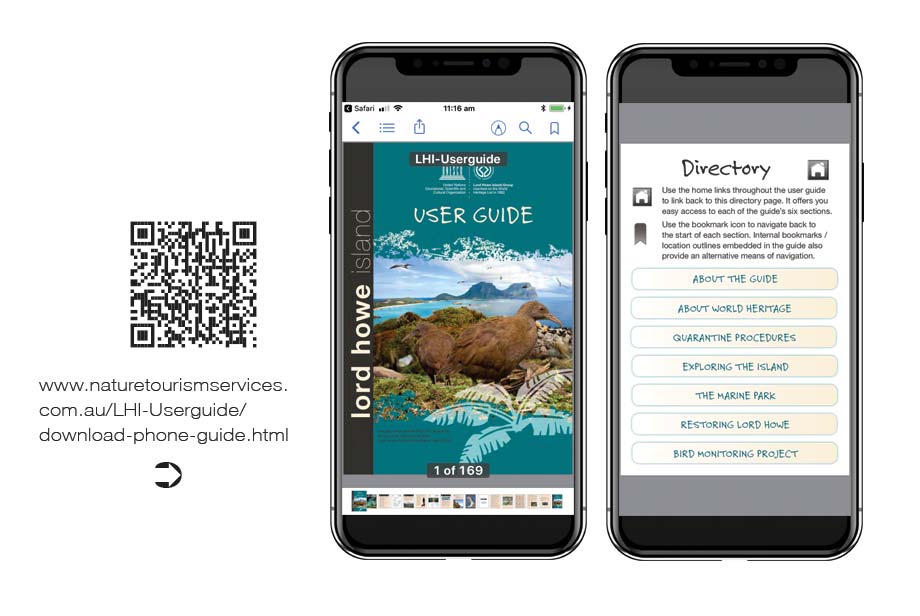
Links to three of these smartphone PDF guides are featured below followed by other links to web app content currently live and working in support of in situ signage.

We have such an amazing suite of options, opportunities and tools to work with now. So many of the limitations on materials, creativity and productivity that were part and parcel of the everyday work ecosystem seem to have been resolved with AI built into the apps we use to deliver these things.
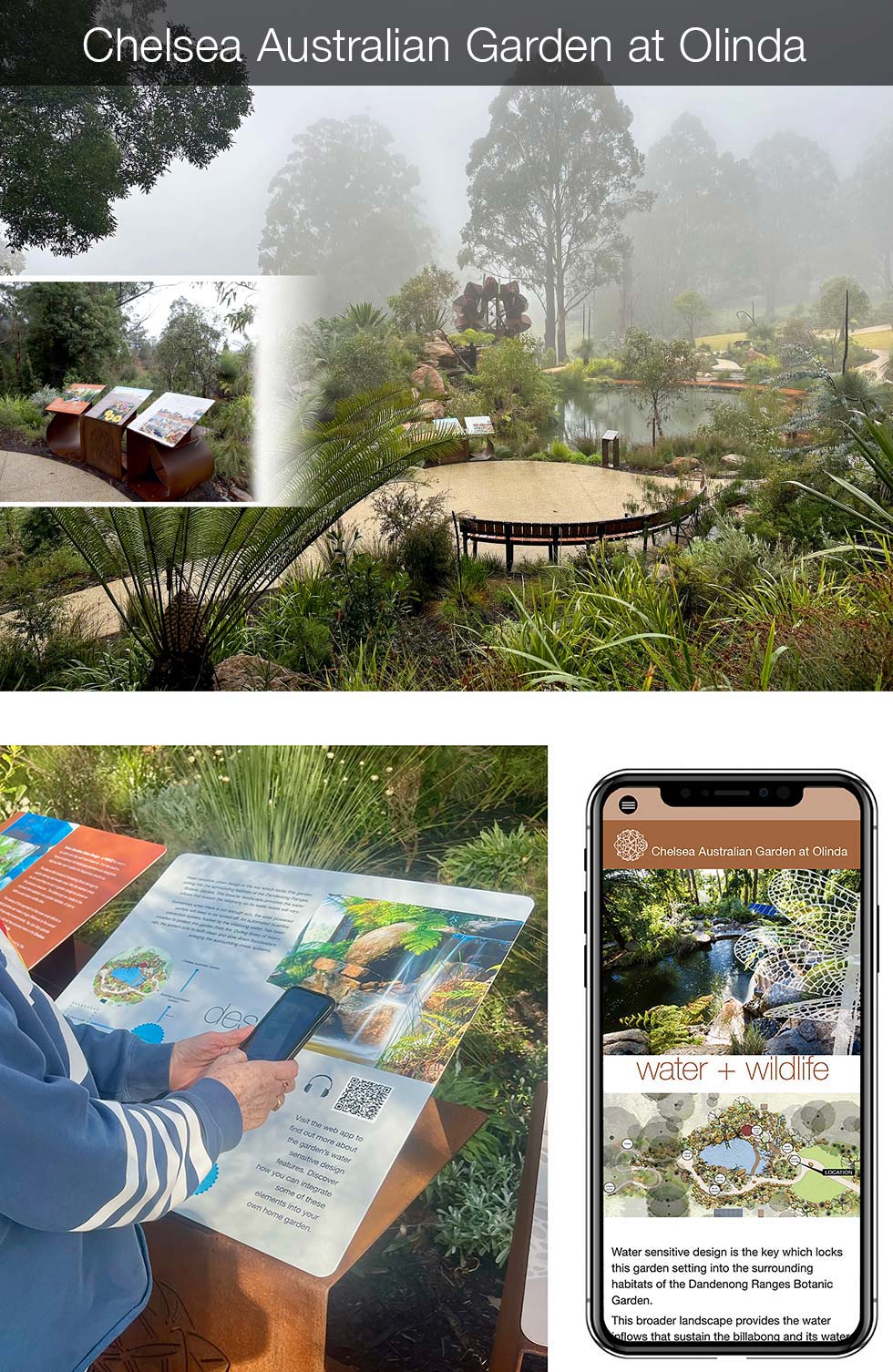
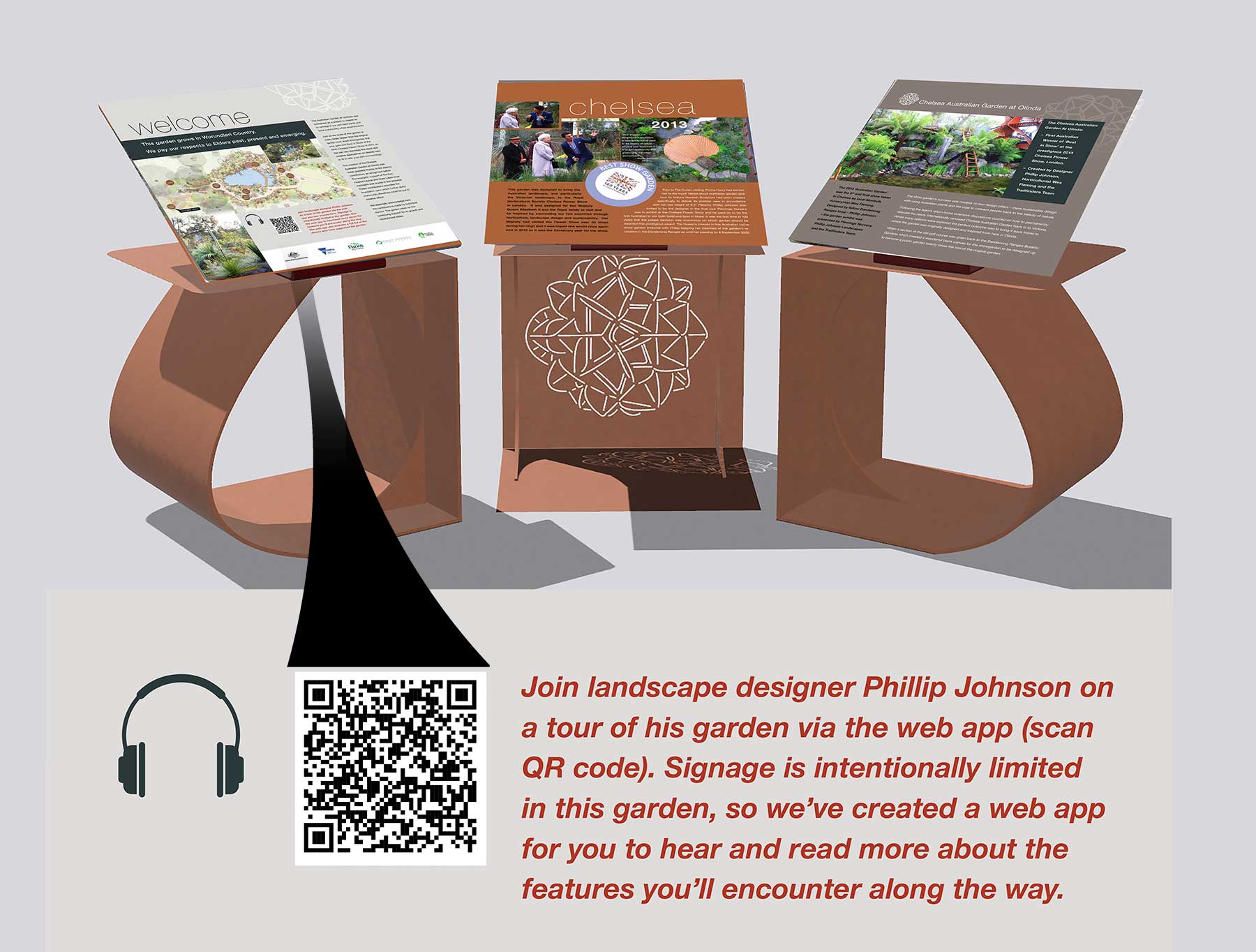
When we interviewed landscape designer Phillip Johnson on the worksite of his remarkable creation in the Dandenong Ranges earthmoving equipment was operating around us. He was giving us the guided tour that we could then take and incoporate into the web app we created as an integral part of the signage suite.
Rather than having to go and get him to re-record this in a studio (not possible with his overstretched schedule) we could simply run the audio through an AI filter on the 'Descript' app and it came out clean and crisp ready to use. Not something you'd put out on a podcast, but for people to listen to wandering around the garden it was just fine.
Then also there was the Shapr 3D drawing program running on our iPad we used to draw up Marianne's concept sketches for the intriguing bespoke signage units he was seeking. With the entire garden a statement of the bespoke and nuanced, he sourced us especially as suppliers he felt could deliver an interpretive product in keeping with the project.
More recently this same Shapr 3D program included an AI generative feature that allowed us to view our new custom signage units for the Narriearra Caryapundy Swamp National Park in outback NSW in a relevant red earth, open woodland setting.
3D design environments are of course not new. They have however had a high bar to jump over in terms of operator skills and software costs in order to access them. We are now able to directly undertake our designs in 3D as an everyday part of our normal workflows.
The full range of major project work we have undertaken since the dark days of Covid is included at the project compendium at the top of this page.