This approach to interpretive planning understands that different people engage with different precincts and experiences in different ways.
Some users need to have the facts of the matter in hand before they can decide what values and opinions they may ascribe to these. Others need to get a feeling for a place before choosing if they want to learn more about it or not.
These simple observations align strongly with our present day understanding of personality types as originally outlined by Carl Jung back in 1927. He identifed the four functional qualities we use to relate to the world around us – thinking/sensation and feeling/intuition.

When we consider this in relation to interpretation it is apparent that people interested primarily in the "facts of the matter" pathway are using the thinking/sensation pathway pair as their first point of reference.
Others preferring to initially get a feeling for a place are unconsciously using an emotional/intuitive approach to begin to connect with the experience on offer.
This simple appreciation highlights the importance of interpretive planning going beyond the headline delivery of interpretive media to also consider the overall context and landscapes within which these experiences are delivered.
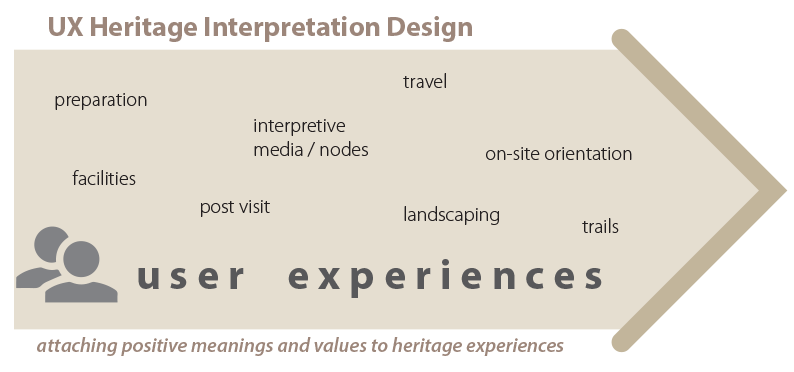
User Experience (UX) interpretive planning focusses on the totality of the visitor experience – not just the component part that is traditionally dedicated to intepretive media.
It recognises that people unconsciously attach values and meanings to every aspect of their heritage experience. This extends from the time of planning their outing through to their post-visit memories and ongoing connections.
By placing the overall user experience (UX) at the heart of the interpretation planning process, it seeks to positively influence the value/meaning sets visitors attribute to the heritage setting.
This approach accepts that people are already attaching meanings and values to a place prior to ever encountering a designated interpretive medium like signage.
Quality landscape design speaks to a location that is valued and cared for, while effective orientation panels recognise that the first priority for visitors in an unfamiliar setting is to get their bearings. They first must access key facilities like toilets and gain a simple understanding of the experiences on offer to them in the precinct.
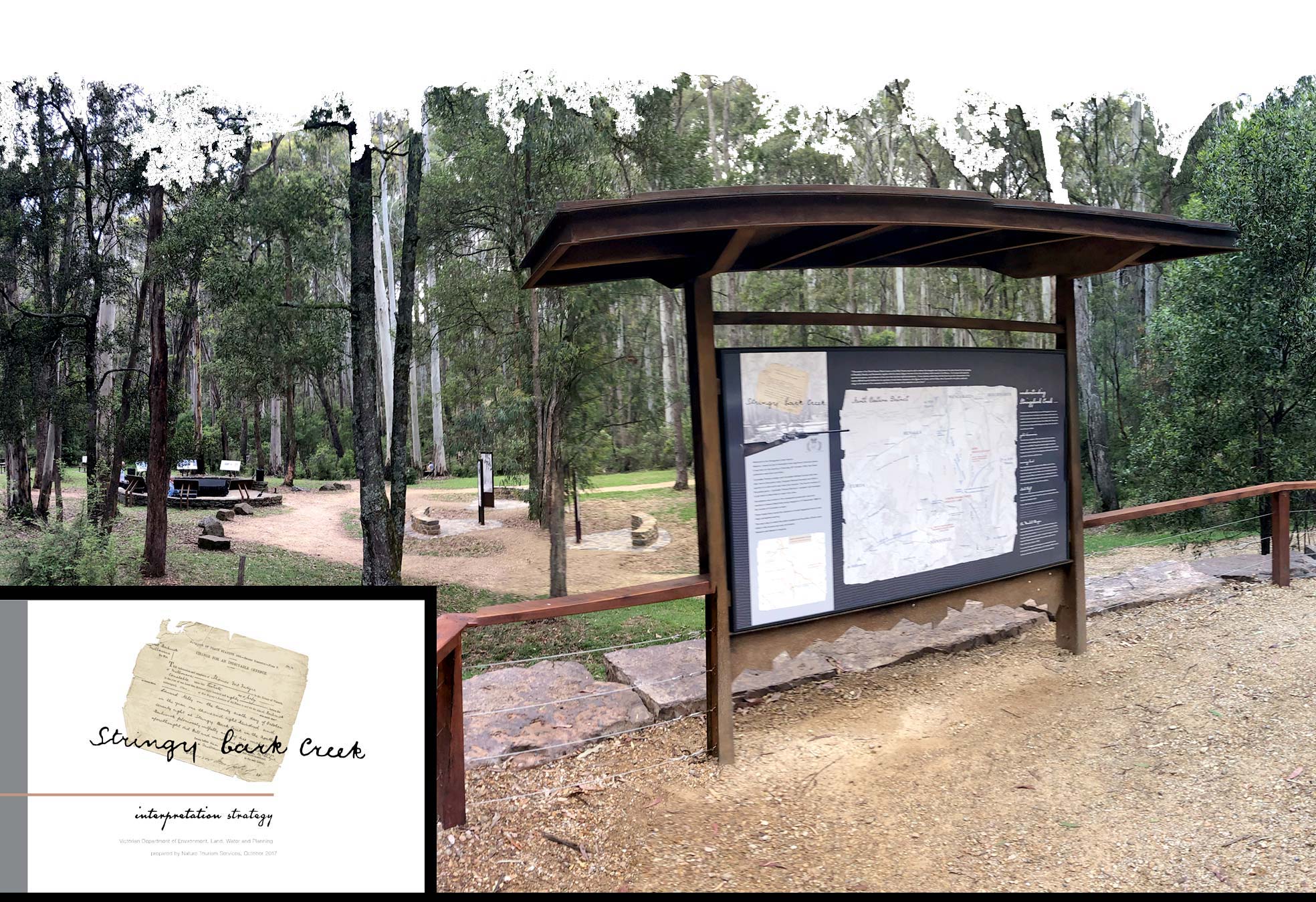
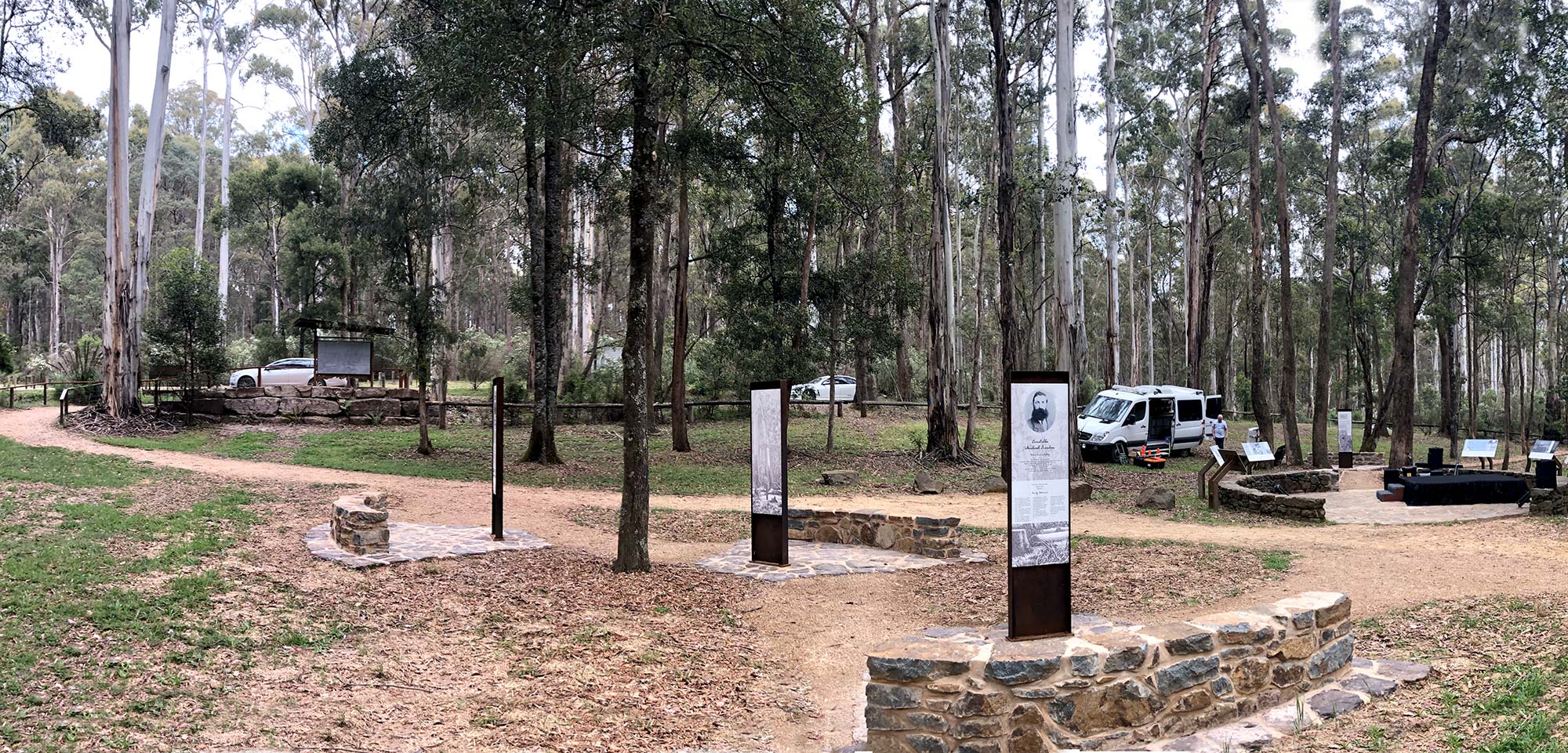
By extending the interpretive process to actively engage with the design and delivery of this infrastructure, UX interpretive design aims to assist in the visitor forming positive meanings and values from the outset of their connection with a precinct. This approach was central to the delivery of the interpretive solutions at Stringybark Creek as shown below. Further explanantion of this and the associated interpretive solutions delivered for this iconic Australian cultural site are provided in the Stringybark Creek Interpretive Strategy as provided here in the form in which it was published for public review by Heritage Victoria in 2017.
The UX interpretation planning approach also clearly identifies that it is not the role of heritage interpretation to define the meaning and value of the heritage asset.
It can simply communicate what is. The meanings and values people may choose to attach to this content are entirely their own affair. This approach was central to the delivery of the interpretive solutions at Stringybark Creek for example where the meanings and significance of what occurred there on site on 26 October 1878 remain highly contested.
In this way a user contract is formed between the manager and the visitor. One provides the experience grounded upon a clear sense of place. The other delivers the emotional assessment as regards what the meaning and value of this may be to them.
Respecting this transactional space ensures interpretation does not overreach its mandate and attempt to attach a defined set of meanings and emotions to the content it presents. It recognises and respects the fact that different people will respond to/interpret different heritage places in different ways. This understanding provides a clear foundation upon which UX heritage interpretation design can build.
The overall context of the visitor setting within which people encounter interpretive material is a vital element to consider in any interpretive planning undertaking.
Ideally interpretive planning comprises an integral part of the overall project development process such that it can inform and nuance the visitor settings being created.
This ground up, integrated interpretive product experience is very difficult to achieve when interpretive product has to be retrofitted into a setting that may have been developed without interpretive planning input.
The careful use of nodes to deliver considered interpretive interventions underpins the interpretive planning process along a trail length.
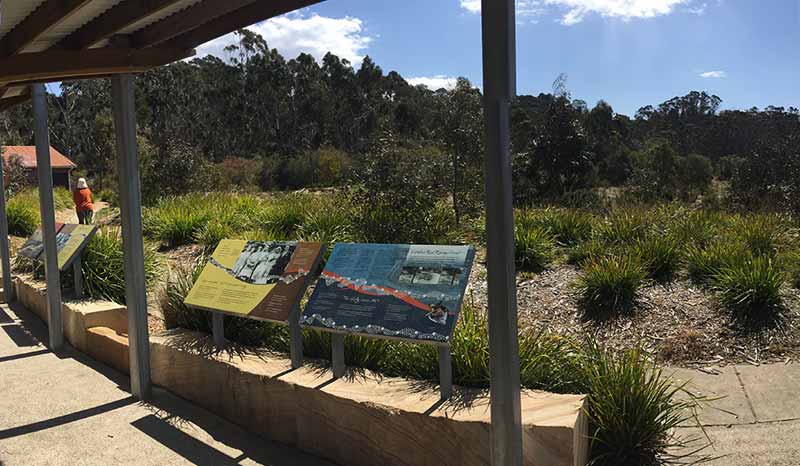
Sometimes these nodes comprise a significant step aside landscape feature as in the case of The Gully Aboriginal Place path at Katoomba shown above.
They can also be as simple as inserting a landscape intervention into the pathway itself. This ensures the visitor approaches signage content with a sense of arrival at the same time as providing impromptu seating that invites them to break their journey and take in the content on offer.
Another crucial element for interpretation planning to address is the overall role of visitor orientation material in the equation.
Visitor orientation material helps people make choices about the visitor experiences on offer and to thereafter connect with these in a secure and confident manner.
Interpretation materials play a derivative, subsequent role in this process, by assisting people to attribute positive meanings and values to their chosen experience.
This simple approach understands that good interpretation is predicated upon good orientation materials being in place in the first instance. It is only once people are confident of where they are and what they are doing, that interpretive considerations can effectively come into play.
User expectations in regard to what information is on offer to them in their native language on a 24/7 basis have changed as result of the widespread uptake of smartphones and tablets since 2010.
People now increasingly expect to make enquiries of the information media on offer to them. They also want to be able to easily and simply customise their own lines of enquiry.
Managers also expect to be able to use new technologies to meet their core obligations including compliance with delivering essential content in line with user accessibility provisions.
Increasingly this means publishing content across an array of formats including as PDFs and in HTML where it can be easily translated into other languages or delivered aurally by screen readers as desired.
The new technologies available today in the form of both digital media and also in the production of materials like signage, requires nothing less than a fundamental reappraisal of many conventional approaches to interpretive planning if interpretive media are to remain relevant to a modern audience.
It is no longer enough to simply roll out disparate stand alone interpretive products and expect the user to weave amongst these thereby creating the thread that somehow ties these together.
This model was to a degree unavoidable in an age when managers had very little choice in relation to what long lasting, light fast materials they could deploy outdoors and visitor centres were recognised as a piece of crucial visitor infrastructure in many high profile settings. With little available choice in the materials mix on offer, investments in interpretive media tended to be capital intensive with mid-long term content replacement / update cycles.

Today however we see a widespread shift across almost all aspects of public infrastructure to smaller more bespoke product solutions with lower capital costs and shorter content management cycles.
In this modern realm it is the needs of the user, not the technological limitations of the manager that drives the delivery of communications product including interpretive media.
This User Experience (UX) design model is only beginning to come into focus in terms of what it means for the interpretive planning process.
The essence of creating an interpretive planning platform that is founded on UX design principles is to have one that favours small scale bespoke interventions that can address present needs while at the same time being capable of easily responding to future innovation.
Similarly it recognises that the user should not have to reorient themselves to new content and differing mapping styles as they migrate from one form of media to another. Rather the information they receive from a sign should mirror the content they can access via their phone.
While it is true that not all interpretive interventions will have a digital component, it is the case that all interpretive product solutions are now being delivered in a mobile optimsed world. Here the goalposts have been permanently shifted in relation to both user expectations and the level of effort people are willing to expend in order to access information.